Research areas
The group combines structural bioinformatics, machine learning, and evolutionary analysis to understand proteins, complexes, membranes, and molecular systems.
Protein dynamics and conformational change
Equivariant models that predict how a protein moves directly from its structure, and generative methods that design proteins with prescribed flexibility.
RNA structure and ion-dependent folding
Why deep learning still struggles with RNA: shallow homology and neglected ions, and what it takes to fix both.
Protein structure and complex prediction
From consensus and quality assessment methods to AlphaFold-era modelling of protein interactions, assemblies, and antibody-antigen recognition.
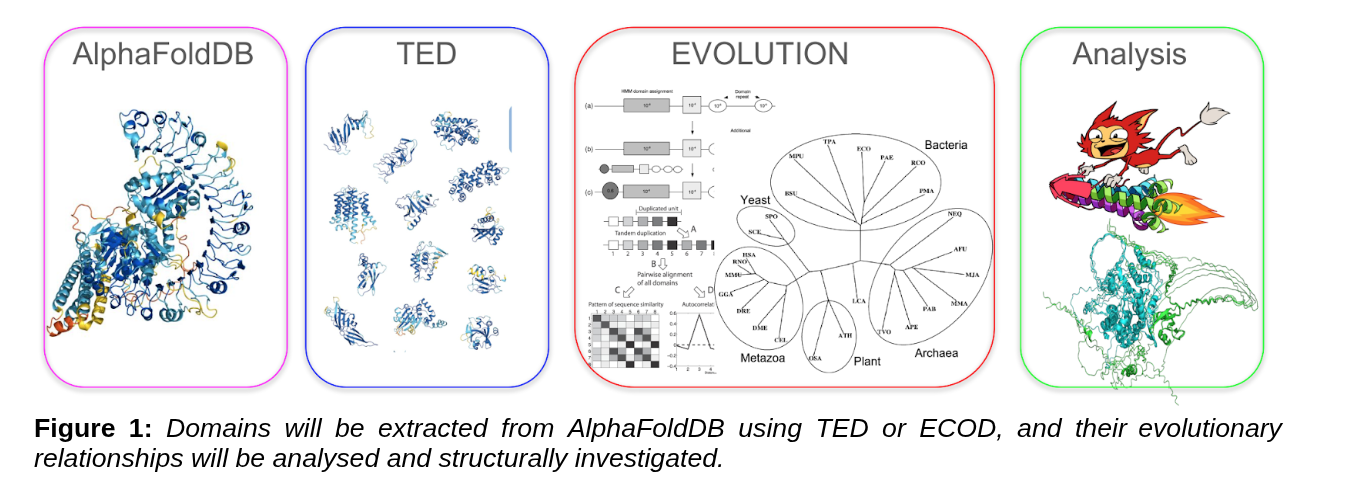
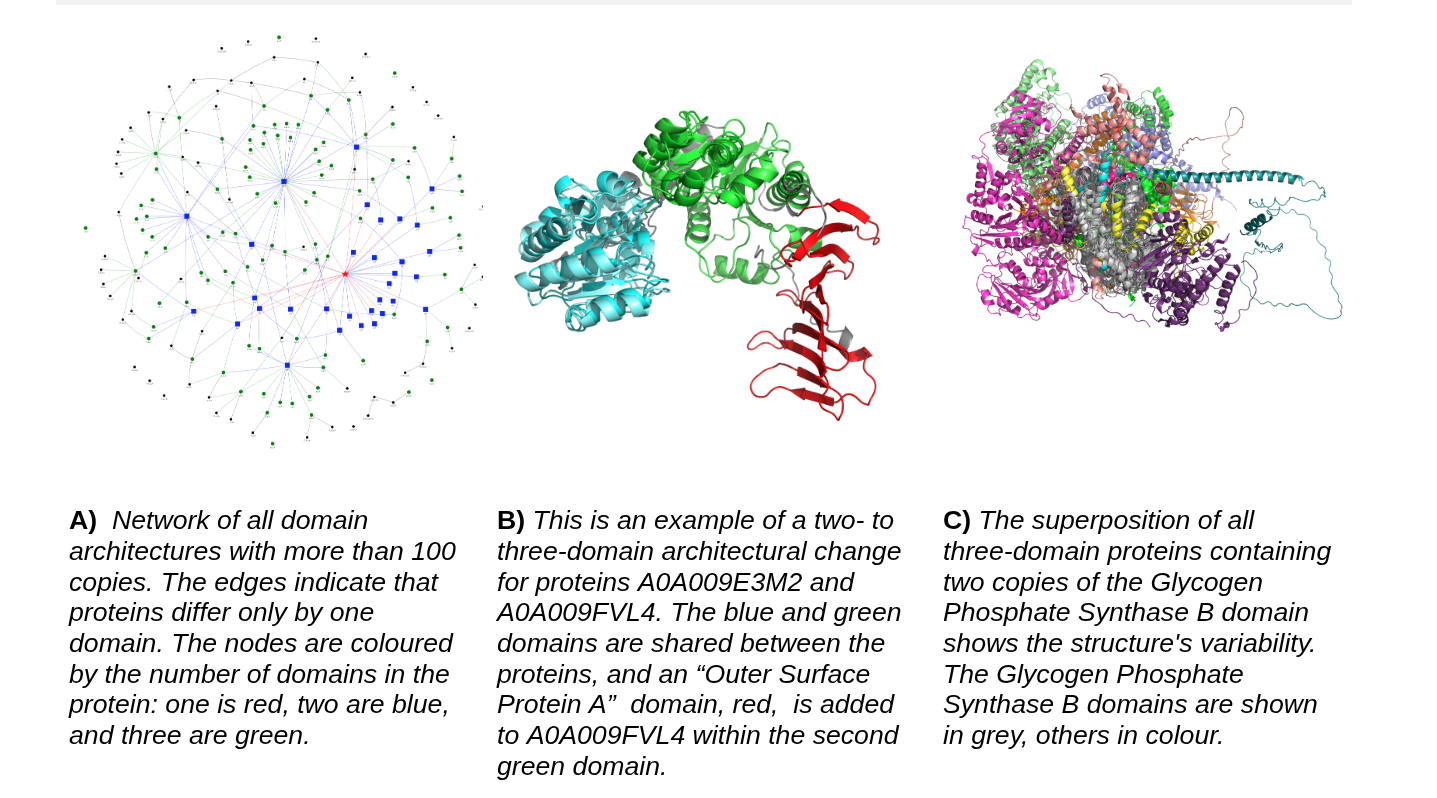
Protein evolution and domain architecture
How domains change, duplicate, and rearrange across the tree of life, now with structure-aware analysis using AlphaFoldDB, TED, and ECOD.
Membrane proteins, from topology to whole membranes
Topology and structure of membrane proteins, extended to multiscale models of whole membranes within CEMERAI.
AI for proteoforms and molecular interactions
Representation learning, graph methods, and protein language models for proteoforms, interactions, and design.